10 Questions to Ask Before Hiring a Remodeling Contractor


After guiding more than 1,600 kitchen and bathroom remodels, we've found that most project disasters trace back to the same missing conversation — not the tile or the paint color, but who you hire. This guide walks through the ten questions every homeowner should ask before signing a remodeling contract, covering recent references, written completion dates, California payment and warranty law, material lead times, self-performed work versus subcontractors, permits, contract format, problem resolution, and the critical difference between a firm price and a budget.
10 Questions to Ask Before Hiring a Remodeling Contractor
Ten questions every homeowner should ask a remodeling contractor before signing — from payment law and warranties to firm pricing vs. budget estimates.


10 Questions to Ask a Remodeling Contractor Before You Sign Anything
If you're about to remodel your kitchen or bathroom, the biggest risk to your project isn't the tile you pick or the paint color you settle on. It's who you hand the keys to.
We've walked more than 1,600 homeowners through a remodel at this point. In that time we've seen projects finish early, finish beautifully, and finish under budget — and we've also seen the other kind. The stalled job. The contractor who stops answering the phone. The change order that arrives with a number nobody warned you about. Almost every one of those disasters traces back to the same thing: one of the ten questions below never got asked.
That's the part homeowners don't expect. The failures aren't usually caused by bad craftsmanship. They're caused by unasked questions — vague timelines, unclear payment structures, materials that hadn't been ordered, permits nobody pulled. All of it knowable up front, if you know what to ask.
So whether you're comparing a licensed remodeling contractor here in Sacramento, collecting quotes from a few family-owned remodelers, or trying to make sense of three bids that look nothing alike, here's exactly what we'd ask before signing.
1. "Can I talk to your last three clients?"
Not the three clients they're proudest of. The last three.
This is the single most useful reframe in the whole list, and the reason is timing. Any contractor can produce three happy references — a great job from 2019, a showcase kitchen from 2021, a neighbor who's a friend of the family. Curated references tell you what a company was capable of on its best day. The last three tell you what they're like right now: current crew, current subs, current workload, current level of attention.
Contractors change. Good ones grow past their capacity and get sloppy. Struggling ones lose their best lead carpenter and never recover. A reference from three years ago can't see any of that.
What a good answer sounds like: immediate agreement, and ideally an offer to put you in touch directly rather than sending a pre-written testimonial.
Red flag: hesitation, redirection ("let me find some better examples for what you're doing"), or a curated list handed back instead of the recent one. The reluctance itself is the answer.
Follow-up worth asking: "Did the project finish on the date you were originally given?" and "Was the final invoice the same as the original price?" Those two questions get you further than any general "were you happy?"
2. "Will you guarantee my completion date in writing?"
Watch the reaction closely on this one. The flinch is data.
A written completion date isn't about being unreasonable or holding a crew's feet to the fire over a rainy week. It's about accountability — and, more practically, it's about whether the contractor has actually built a schedule or is planning to figure it out as they go. You can't commit to a date you haven't thought through.
In our experience, contractors who won't put a timeline in writing usually aren't planning to hit one. And the cost of that lands entirely on you: weeks of eating takeout, showering at the gym, or living around a plastic-sheeted doorway with no end date in sight.
What a good answer sounds like: a firm date, in the contract, with a clear and reasonable list of what would legitimately move it — a permit delay at the city, a discontinued material, hidden damage discovered behind a wall, a change you request mid-project.
Red flag: "We don't do that," "nobody in this industry can promise that," or a range so wide it's meaningless. A six-week job quoted as "somewhere between six and sixteen weeks" is not a schedule.
3. "How do I structure my payments?"
This question has a legal answer, not just a best-practice one — and most homeowners have no idea.
In California, a contractor cannot collect more money from you than the value of the work they've actually completed. That's state law, not a negotiating position. Progress payments are meant to track progress. There's also a strict limit on how large a down payment can be on a home improvement contract, and it's much smaller than most homeowners assume.
Why this matters so much: payment structure is leverage. As long as the money remaining is roughly proportional to the work remaining, both sides have a reason to keep moving. The moment you get front-loaded — 50% up front, another 30% before drywall — you've handed over your leverage and taken on all the risk. That's the position homeowners are in when a project goes quiet: mostly paid, half finished, and out of options.
What a good answer sounds like: a payment schedule tied to identifiable milestones — demo complete, rough-in inspected and passed, cabinets set, final walkthrough — with a modest deposit and a final payment held until the punch list is genuinely done.
Red flag: a large deposit "to get you on the schedule," payments requested ahead of work performed, or pressure to pay in cash. If a contractor's cash flow depends on your deposit, you're financing their business, not your remodel.
4. "What's your warranty, and what does it cover?"
California sets a floor on workmanship warranties, but a floor is a floor. Our benchmark: a contractor genuinely confident in their work should be comfortable going meaningfully beyond the minimum — closer to two years on workmanship.
More important than the number, though, is the scope. "One-year warranty" is a phrase, not a policy. Ask specifically:
- Does it cover labor, materials, or both?
- Are manufacturer warranties on cabinets, fixtures, and countertops registered in your name, and will you get that paperwork?
- What's explicitly excluded? (Normal settling, grout hairlines, and homeowner-supplied materials are common carve-outs — reasonable ones, but you want them stated, not implied.)
- What's the actual process when something fails? Who do you call in month fourteen, and what's the response time?
Red flag: a warranty that exists only verbally. If it isn't written into the contract, it isn't a warranty — it's a sentiment.
5. "Will all my materials be on hand before you start the job?"
This is the most underrated question on the list, and it's the one that quietly destroys more timelines than anything else.
A contractor who starts demo before the cabinets, tile, and fixtures have arrived is gambling with your schedule. Lead times on specialty items — custom cabinetry, imported tile, certain plumbing fixtures — can stretch for weeks with no warning, and backorders don't announce themselves in advance. If demo happens first and the vanity is twelve weeks out, you don't have a delayed project. You have a demolished bathroom and a waiting game.
"We'll have it here by the time we need it" is a soft answer to a hard question.
On every job we run, materials are on-site before demo day. Full stop. It's not a nicety; it's the mechanism that makes a written completion date possible in the first place. Questions 2 and 5 are the same question wearing different clothes.
What a good answer sounds like: a specific staging plan, a named location where materials will be held, and a confirmation that demo doesn't begin until the delivery is verified and inspected for damage.
In-house vs. Subs
6. "Who's actually doing the work — your crew or subs?"
Subcontractors aren't automatically a red flag. Nearly every remodel involves specialty trades, and a good electrician or plumber who's worked with the same contractor for a decade is often better than an in-house generalist.
But every layer between the contractor you signed with and the person swinging the hammer is a layer where things can go sideways. Scheduling conflicts. Quality standards that don't transfer. Communication that goes through three people before it reaches the person who needs to hear it. A sub who's juggling four jobs and prioritizes the one paying more.
The more work a contractor self-performs, the more control they hold over quality and schedule — and the more likely your project actually finishes when they said it would.
What a good answer sounds like: a clear breakdown of what's in-house versus subbed, how long they've worked with each trade partner, and confirmation that subs are licensed and insured under the same standards. Also worth asking: who is on site day to day, and who is my single point of contact?
Red flag: vagueness about who's coming, a different crew every week, or a project manager who's never physically been to your house.
7. "Are you pulling permits, and which ones?"
The rule is simple: if any part of your project requires an inspection, it requires a permit. No exceptions.
A contractor who offers to skip this step isn't saving you money — they're transferring risk onto you. Unpermitted work becomes your problem, not theirs, and it surfaces at the worst possible moments: when you sell and the buyer's inspector finds it, when your insurer denies a claim tied to unpermitted electrical, when the county requires you to open finished walls to prove what's behind them.
There's a quality dimension too. Inspections are a third party verifying that framing, electrical, and plumbing were done correctly. Skipping them means the only person confirming the work is safe is the person who did it.
What a good answer sounds like: a specific list — electrical, plumbing, mechanical, building — with the contractor named as the permit applicant, and inspection milestones built into the schedule.
Red flag: "This job doesn't really need one." Or worse: a request that you pull the permit as the homeowner. That's a way of making you the responsible party for someone else's work.
8. "What contract format do you use?"
Almost no homeowner asks this, which is exactly why it's worth asking.
Every contractor writes their agreements differently. Some use a state-association template, some use a version an attorney drafted years ago, some use a one-page document that's been copy-pasted since 2014. That fine print determines who's protected when something goes wrong — and whether you have any real recourse.
Things worth reading for specifically:
- Scope of work. Is it detailed enough that you could hand it to a different crew and get the same result? Vague scope is where change orders are born.
- Change order process. Are changes priced and signed before the work happens, or billed after?
- Allowances. If tile is budgeted at a per-square-foot allowance, what happens when you pick something above it?
- Dispute resolution. Mandatory arbitration? Who chooses the arbitrator? Who pays?
- Termination. What happens, and what's owed, if either side walks away?
If a contractor hands you a contract, have someone you trust read it before you sign — ideally an attorney. An hour of review is inexpensive relative to a six-figure remodel.
9. "How do you handle problems when they come up?"
Here's an honest admission: even the best remodels aren't perfect. We've done more than 1,600 of them, and very few have gone off without a hitch somewhere. A supplier ships the wrong finish. A wall opens up and reveals plumbing nobody could have predicted. Someone measures once instead of twice.
What separates a good contractor from a bad one isn't a flawless record — it's what happens in the twenty minutes after something goes wrong.
Listen for ownership, not excuses. The best answer to this question is usually a specific story: here's a job where something went badly, here's exactly what we did, here's what it cost us. A contractor who can't produce a single example of something going wrong is either new or not being straight with you.
Follow-up worth asking: "Who absorbs the cost when the mistake is yours?" You want to hear a clear answer before you need one, not after.
10. "Am I getting a firm price or a budget?"
These are not the same thing, and no distinction on this list costs homeowners more money.
A firm price holds. It doesn't move unless you change the scope of work. The contractor has done the takeoffs, priced the materials, accounted for labor, and accepted the risk of having estimated wrong.
A budget is an estimate. A number that can move — and in practice usually moves in one direction. Starting a remodel on a budget instead of a firm price is how homeowners end up with bills they never planned for and no clear basis for arguing about them.
Ask directly, and ask for the answer in writing. Then ask the follow-ups: What could change this number? Are there allowances built in, and at what amounts? What happens if you open a wall and find something unexpected — how is that priced, and do I approve it first?
This is also the question that makes competing bids comparable. A firm price and a budget are not two quotes for the same thing, and the budget will almost always look cheaper on paper. That's precisely the problem.
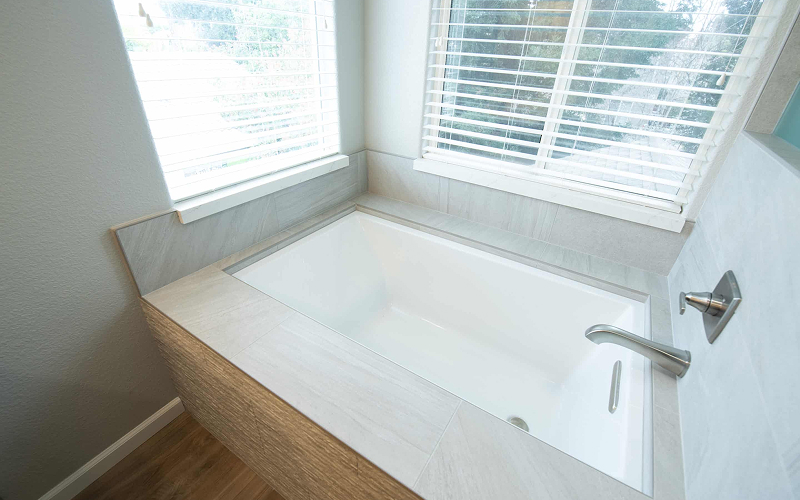
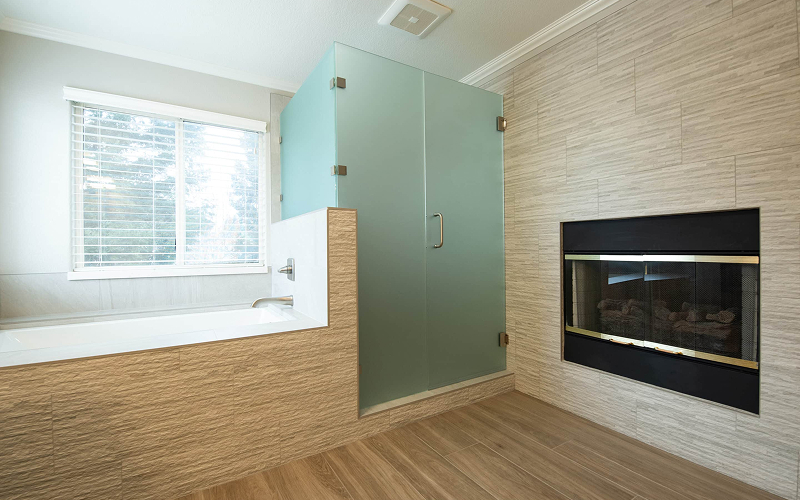
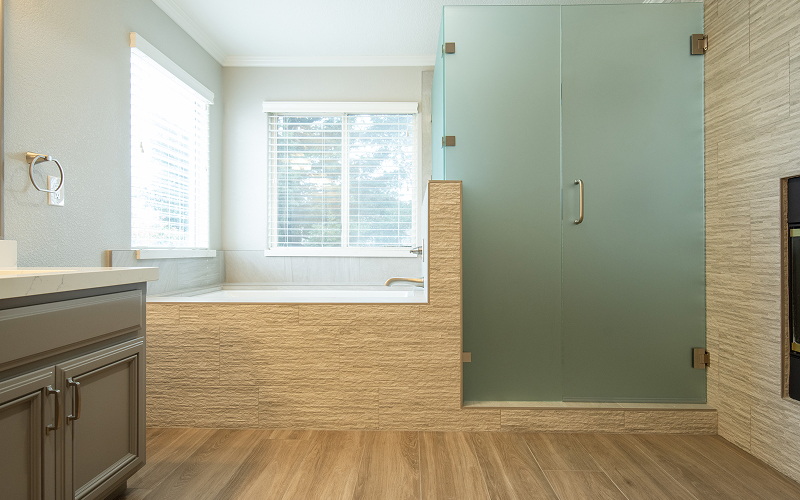









We are very impressed by the professionalism that Bath Crate had as they took care of us and our project. They were punctual, informative, and friendly at every point of the remodel.
Ron & Wendy R.